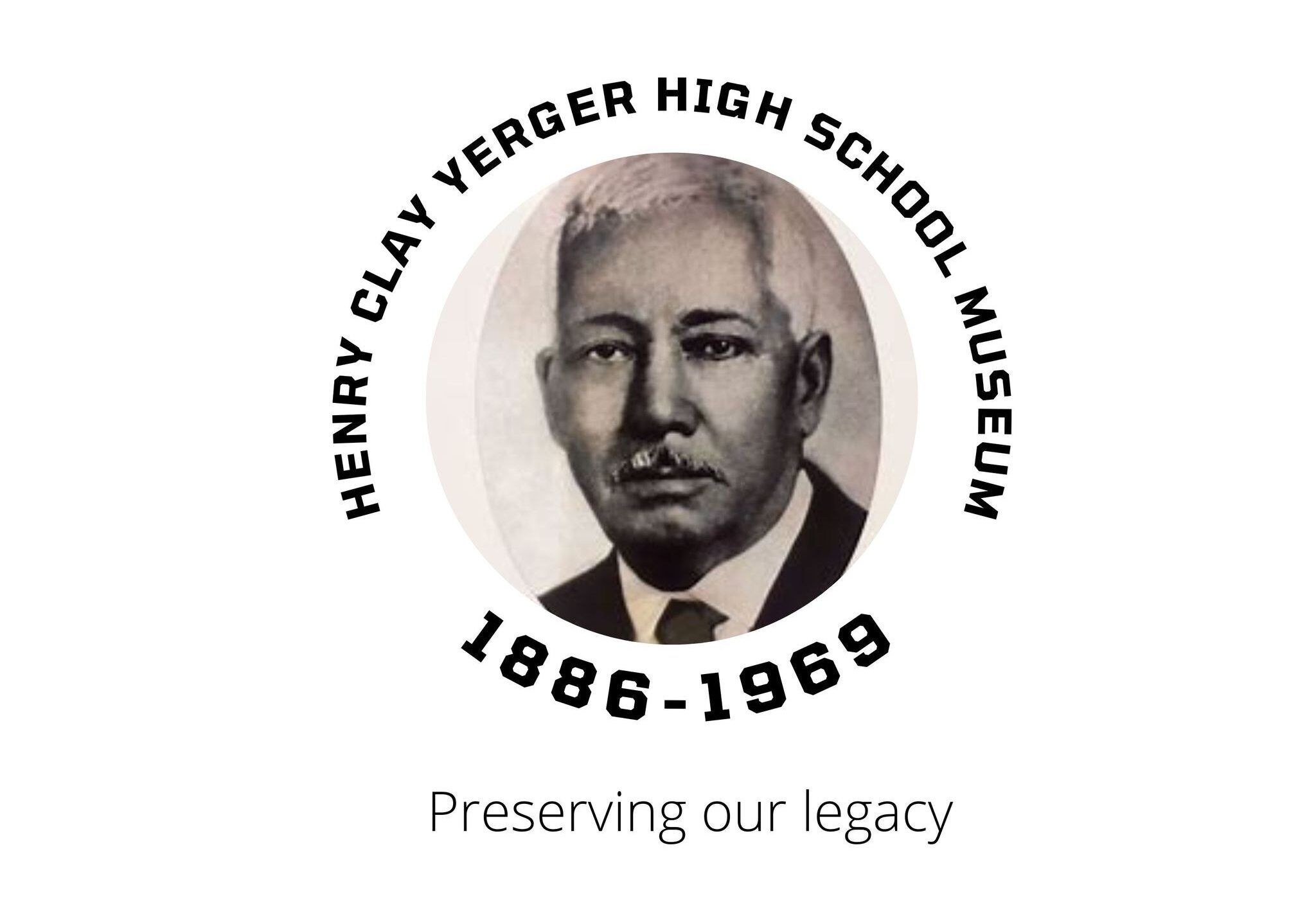
Henry Clay Yerger High School Museum
Thank you for visiting the website of the Henry Clay Yerger High School Museum. We are thrilled about all the positive things that are going to happen, and we hope that you will keep an eye on all the announcements and events that are coming up so that you can act appropriately.

We are always accepting donations if you are so moved. Donations can currently be mailed directly to our mail at P.O. Box 845, Hope, Arkansas 71802. You will be able to assist us in maintaining the museum using electronic means in the future. Your gifts are tax deductible because the Yerger Museum was founded as a nonprofit organization and was recognized by the IRS as a 501(c)(3) agency in 2001.

OPEN HOUSE
Yerger Museum

Open House Ceremony
2024

OPEN HOUSE
2024

Open House
2024

OPEN HOUSE
2024

OPEN HOUSE
2024

H, C. YERGER DISPLAY
2024

Open House
2024
INSIDE VIEW OF MUSEUM


NOTABLE GRADUATE

Ketty Lester is a singer and actress best known for her chart-topping single “Love Letters,” as well as her appearance in the cult classic film Blacula (1972). Lester was a regular on the daytime drama Days of Our Lives and was especially known for her long-running role on the TV series Little House on the Prairie.
Ketty Lester was born Revoyda Frierson in (Hempstead County) on August 16, 1934. She was one of fifteen children born to a farm family. Her interest and talent for music led to her singing at church and in school choirs. She won a scholarship to San Francisco City College in California, where she studied music.
In San Francisco, she began singing professionally at the renowned Purple Onion nightclub under the stage name Ketty Lester. She went on to headline the opening of the Purple Onion in Hollywood and appear at clubs such as the Village Vanguard in New York City. She sang in East Coast clubs from Boston, Massachusetts, to Baltimore, Maryland, also touring Europe as a singer with the Cab Calloway orchestra.
On December 26, 1957, at age twenty-two, she appeared as a contestant on the popular television program You Bet Your Life, hosted by comedian Groucho Marx. After commenting on her striking beauty, Marx asked if she would sing a song. Seemingly unrehearsed, she performed “You Do Something to Me” with the show’s musicians. After an ovation from the audience, Marx said, “You’re going to be one of our top stars before long—very few people can sing that hot.”
Through her work at the Purple Onion in Los Angeles, California, Lester met several record producers. After her first single, 1962’s “Queen for a Day,” Era Records released her recording of “I’m a Fool to Want You,” backed with “Love Letters.” It was “Love Letters” on the B-side that created a sensation, rising to number five on the charts in 1962.
Moving to RCA, she recorded steadily through the 1960s, with singles including “But Not for Me,” “You Can’t Lie to a Liar,” and an upbeat version of Woody Guthrie’s “This Land Is Your Land.” Her 1966 recording of “When a Woman Loves a Man” was a response to the Percy Sledge hit “When a Man Loves a Woman.”
Her albums include Love Letters (1962), The Soul of Me (1964), Where Is Love? (1965), When a Woman Loves a Man (1966), and Ketty Lester in Concert (1974). In 1962, she toured with the Everly Brothers. With her name misspelled as “Kitty,” she was nominated for a 1963 Grammy as Best Female Pop Vocalist, competing with Lena Horne, Peggy Lee, and Ella Fitzgerald. (Fitzgerald won.)
While at college in San Francisco, Lester had become involved with a theatrical group at the University of California, Berkeley. She put her theatrical experience to use in 1964, appearing off-Broadway in the play Cabin in the Sky, for which she won a Theatre World Award. Lester went on to appear in such feature films as Up Tight (1968), Uptown Saturday Night (1974), and Neil Simon’s Prisoner of Second Avenue in 1975. However, she may be best known for 1972’s cult classic Blacula. It was the first horror movie in the genre called “blaxploitation,” with the word being a mix of “black” and “exploitation.”
Lester’s other feature films were mixed with appearances on television shows, including That Girl, Julia, Sanford and Son, Love American Style, Marcus Welby M.D., Streets of San Francisco, The Waltons, Lou Grant, Happy Days, Hill Street Blues, St. Elsewhere, In the Heat of the Night, and L.A. Law. Her TV movies include Louis Armstrong: Chicago Style (1976) and It’s Good to be Alive (1974), the Roy Campanella story.
From 1975 through 1977, Lester portrayed Helen Grant on the daytime drama Days of Our Lives. She was especially known for her television work as a regular on Michael Landon’s Little House on the Prairie from 1978 to 1983, playing Hester-Sue Terhune, the teacher at a school for the blind.
In 1984, Lester released an album of Christian music, I Saw Love, and appeared in movies and television into the 1990s, including the 1994 film House Party 3 and the TV show Getting Personal in 1998. In 2020, she published her memoir Ketty Lester: From Arkansas to Grammy-Nominated “Love Letters” to Little House on the Prairie. She resides in Los Angeles. She was inducted into the Arkansas Black Hall of Fame in 2022
NOTABLE GRADUATE

Dorothy McFadden Hoover was an accomplished aeronautical research scientist who was born in Hope, Arkansas in 1918. One of her greatest achievements was her contribution to the development of the “thin sweptback tapered wing,” which became the aviation industry standard and transformed air travel in the 20th century. Her life story was essentially unknown until she was briefly mentioned in the highly acclaimed book Hidden Figures: The American Dream and the Untold Story of the Black Women Mathematicians Who Helped Win the Space Race by Margot Lee Shetterly. Shetterly described Hoover as “exceptionally fluent in abstract mathematical concepts and complex equations.”
Dorothy Estheryne McFadden was the youngest of four children born to William McFadden and Elizabeth Wilburn McFadden. She graduated from Henry Clay Yerger High School in Hope in 1934 at the age of fifteen. McFadden entered Arkansas AM&N, now the University of Arkansas at Pine Bluff, as a sixteen-year-old in 1934 and graduated in 1938 with a BS in mathematics.
After teaching high school for several years, Dorothy earned an MS in mathematics from Atlanta University (now Clark Atlanta University), the first institution in the country to award graduate degrees to African Americans. Her thesis, “Some Projectile Transformations and Their Applications,” prepared her for her future work in aeronautics.
Dorothy was one of the first of six African American women hired by Langley Labs, NACA (National Advisory Committee for Aeronautics, later NASA). Her graduate-level work helped set her apart from her peers, and she was given rigorous mathematical assignments from Langley engineer R. T. Jones, the premier aeronautical engineer of the twentieth century. In 1946 Jones selected Dorothy to be his personal mathematician. She was the first of the Black human computers to work directly with an engineer and she thrived in this highly competitive environment.
In late 1946 Dorothy began working with R.T. Jones’ successor, Frank S. Malvestuto Jr., a brilliant engineer and prolific researcher. By 1951, she had earned the title of Aeronautical Research Scientist. That same year, she was listed as co-author with Malvestuto on two significant research publications addressing “thin sweptback tapered wings” on aircraft. Being listed as a co-author was a landmark accomplishment. She was the first African American woman to be listed on a Langley engineering report.
In 1952, Dorothy’s marriage to Ricardo Hoover ended, and she temporarily left the world of engineering to pursue her interests in theoretical mathematics, earning an MA in physics at the University of Arkansas in Fayetteville. She was the first woman, of any race, to earn a master’s in physics from UA. A portion of her 1954 master’s thesis, “Estimates of Error in Numerical Integration,” was included in the Journal of the Arkansas Academy of Science the following year.
Hoover returned to the Washington DC area, where she served in a variety of government positions. In 1959 Hoover joined a small group of highly skilled mathematicians in the theoretical division of NASA’s Goddard Space Flight Center, combining her work in physics with her mathematical prowess and contributing valuable information that promoted America’s success in the space race.
Dorothy McFadden Hoover’s tenacity in her pursuit of advanced degrees in mathematics and physics blazed a trail for all women, and especially for women of color. In addition, she broke the “glass ceiling” several times in her professional life, coauthoring papers with white male scientists at NACA and achieving a number of “firsts” in both academics and in government service. Ms. Hoover’s success was stunning given the many obstacles of the Jim Crow South, coupled with the fact that she was a woman in a male-dominated profession.
While continuing her mathematics research in Goddard’s Theoretical Division, Hoover began writing a book, A Layman Looks with Love at Her Church, a history of the African Methodist Episcopal (AME) Church. Hoover was a member of the Campbell AME Church located in the Anacostia Historic District in southeast Washington, D.C. The book was published in 1970.
Dorothy McFadden Hoover died in 2000 in Washington DC.
Photos Courtesy of Richard D. Sallee
Phone
(870)-826-0801
VISIT
Call for appointments for special tours
Address
401 H. C. Yerger Street Hope, AR 71801 Mail: P.O.Box 845 Hope, AR 71802
 English